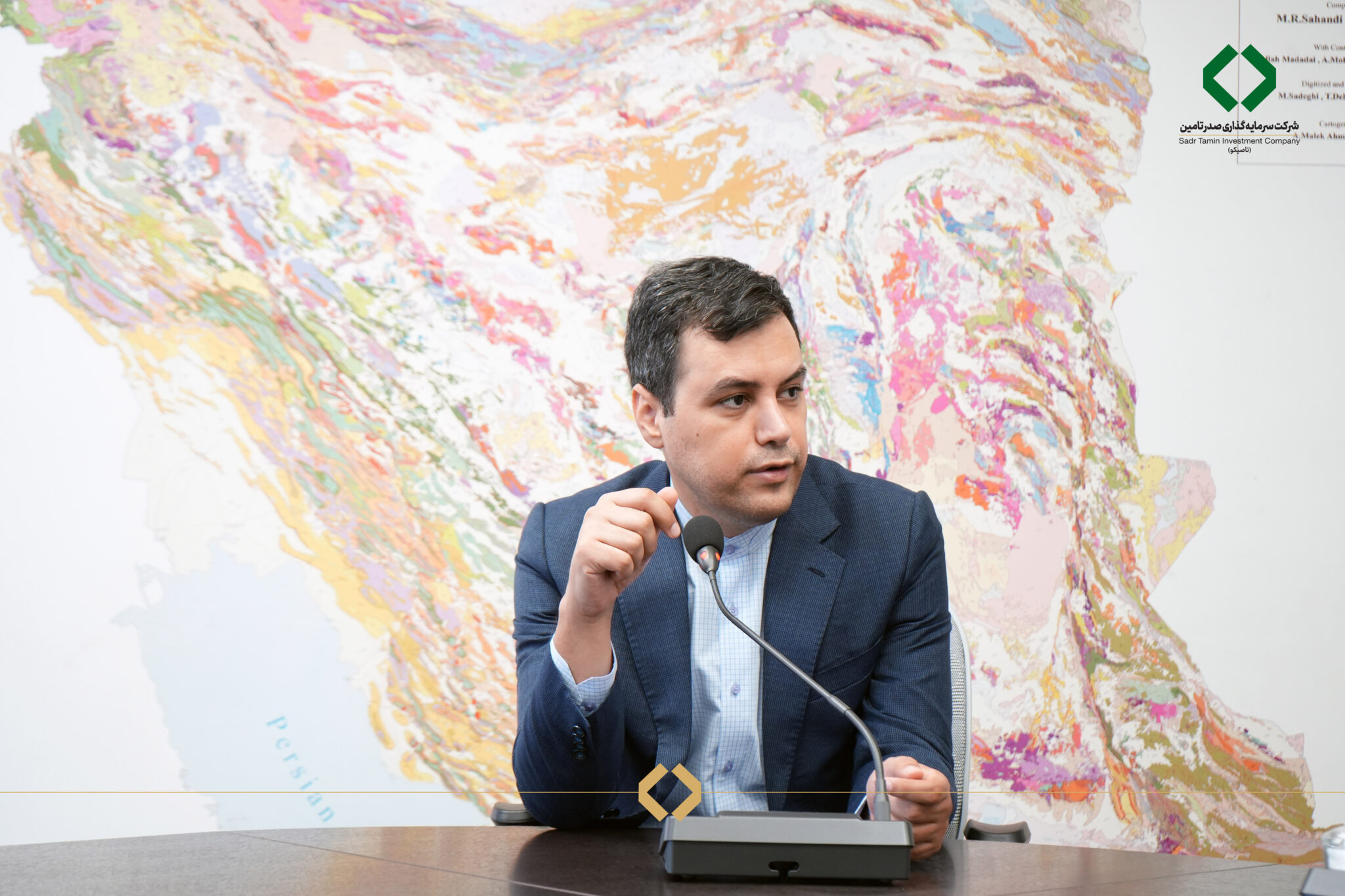
Sadr Tamin Investment Holding (TASICo), the mining and industrial arm of Shasta, has in recent years focused its activities on four key sectors: gold and precious metals, copper and copper products, coal and its value chain, and various salts and metal ions. However, based on Shasta’s new strategic policies and extensive studies, TASICo is now shifting toward a *focused strategy centered on colored metals—gold, silver, and copper—*while gradually reducing activities in unrelated sectors. According to Ehsan Ahmadi, Executive Board Member of TASICo, this transition will position the holding as Iran’s leading market player in gold, silver, and copper in the near future.
Portfolio Optimization and the Need for a Strategic Shift
Ahmadi emphasizes that “divesting companies” is not the proper description of TASICo’s plan; the accurate term is portfolio optimization. Historically, many unsuccessful divestments in the country have stemmed from a lack of strategy for deploying the revenue generated by such sales—assets were sold, but there was no clear plan for reinvestment or improving the equity portfolio. TASICo seeks to change this pattern through a disciplined and expert-driven approach.
This initiative began around 2022 within Shasta and has gained momentum following the adoption of the Seventh Development Plan. Under paragraph “T” of Article 28, pension funds and their subsidiaries are required to divest any holdings in which they own more than 20% and whose value is below a specified threshold, within a maximum of two years. Furthermore, paragraph “S” stipulates two years of dismissal from public service as the penalty for failing to execute this mandate. These legal requirements have made managers more committed than ever to following through.
Globally, successful pension funds tend to act as professional shareholders rather than direct operators of companies. Therefore, reducing operational roles and focusing on strategic equity ownership aligns well with international best practices.
Transparency, Independent Valuation, and Targeted Allocation of Divestment Revenue
To ensure an effective and credible implementation of this strategy, TASICo has established several key mechanisms:
Buyers must be vetted for technical and financial capability.
Equity valuation is conducted entirely by an independent third party, with no interference from TASICo or Shasta.
95% of the proceeds from divestments must be reinvested within the holding itself. For example, if TASICodivests its shares in “Mes Bahonar,” the objective is to redirect those funds toward acquiring shares in “National Copper,” which offers greater dividend and capital-gain potential.
While reducing ownership below 20% may result in losing direct managerial control of some companies, Ahmadi explains that the advantages of focusing on larger and more strategic industries outweigh the risks. Toseeco aims to retain effective board representation even with minority stakes, and exposure within large industries provides more balanced risk. Additionally, the holding is developing a diversified investment portfolio in which downturns in some companies are offset by growth in others.
Why Focus on Colored Metals?
Over the past five years, TASICo has conducted comprehensive benchmarking and competitive analysis. The results show that in sectors like steel, achieving market leadership is unrealistic, as competitors have invested heavily and matching their scale would require tens of billions of dollars in new investment. In contrast, in gold, silver, and copper, TASICo already possesses several high-value mines, making market leadership attainable through targeted expansion.
These metals were chosen because:
Gold, silver, and copper are globally recognized safe-haven assets.
Central banks worldwide hold these metals as strategic reserves.
Global forecasts anticipate significant price growth for these metals over the next five years.